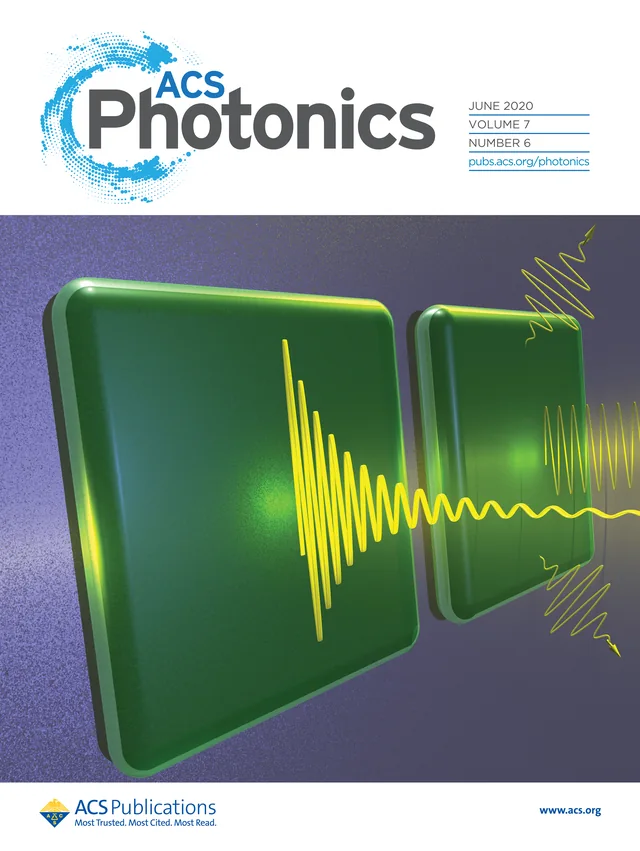
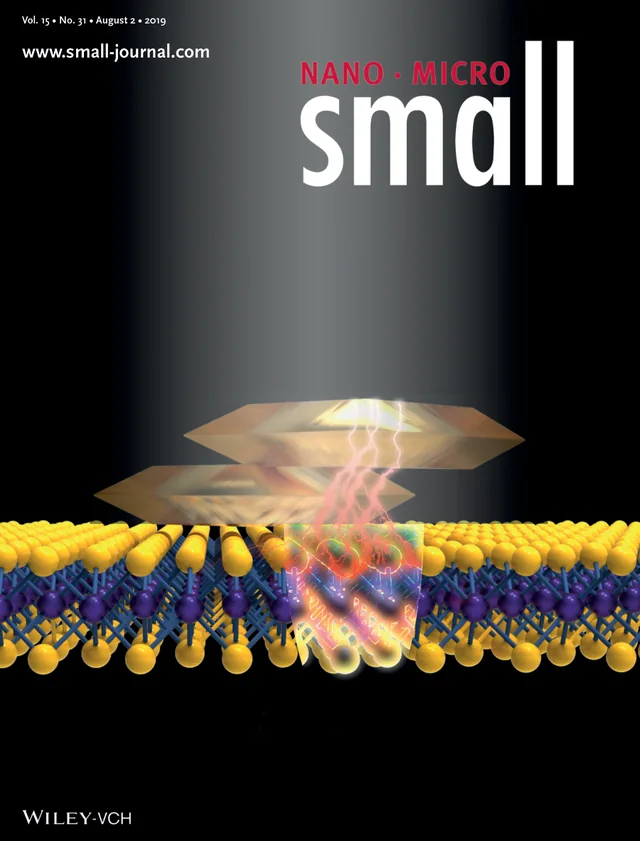
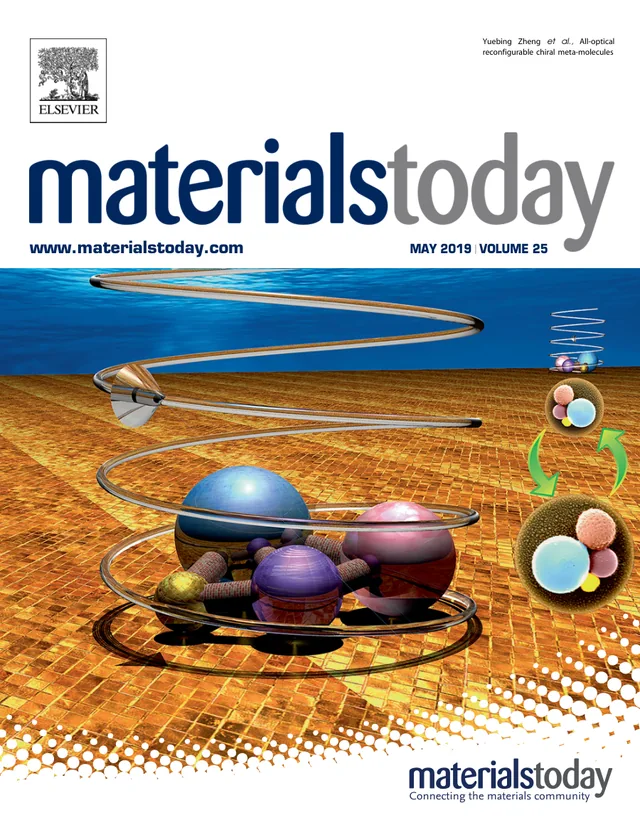
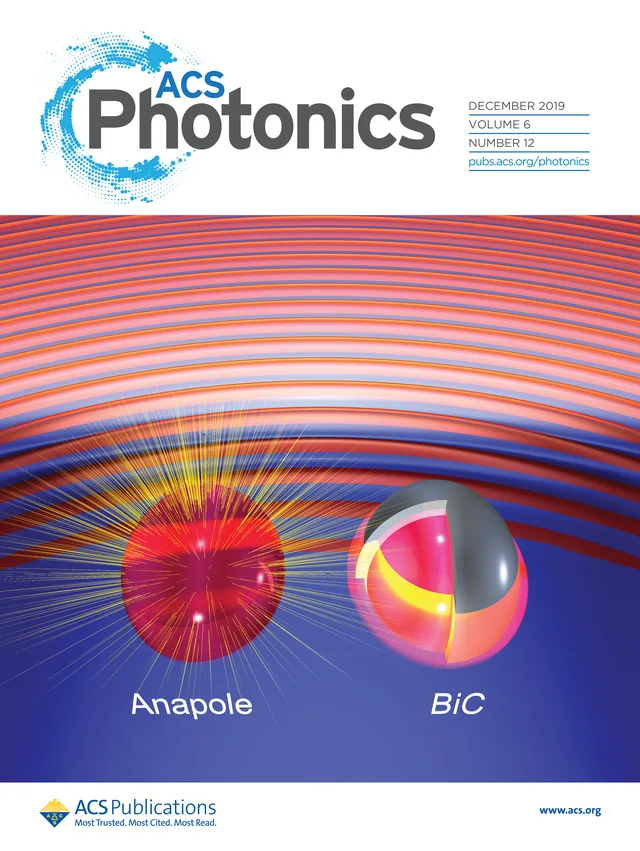
- D. Trivedi, A. Bhowmik, L. Niaz, and A. Krasnok, “Reflection-Zero Waveforms for Selective Loading in Shared-Line Superconducting Qubit Circuits,”Advanced Quantum Technologies 9(9), e70441 (2026).doi:10.1002/qute.70441Selected for a cover feature
Designs microwave pulses from the reflection zeros of a coupled qubit circuit to load a chosen mode while reducing energy reflected into a shared control line. Circuit simulations show substantially less excitation of neighboring qubits than equal-energy Gaussian pulses.
- A. Krasnok, “What Quantum Computer to Buy?,”AVS Quantum Science 8(3), 034101 (2026).doi:10.1116/5.0337237
Provides a procurement framework that matches quantum hardware and access models to an institution’s teaching and research needs. It connects platform choice to staffing, facilities, operating costs, and upgrade plans.
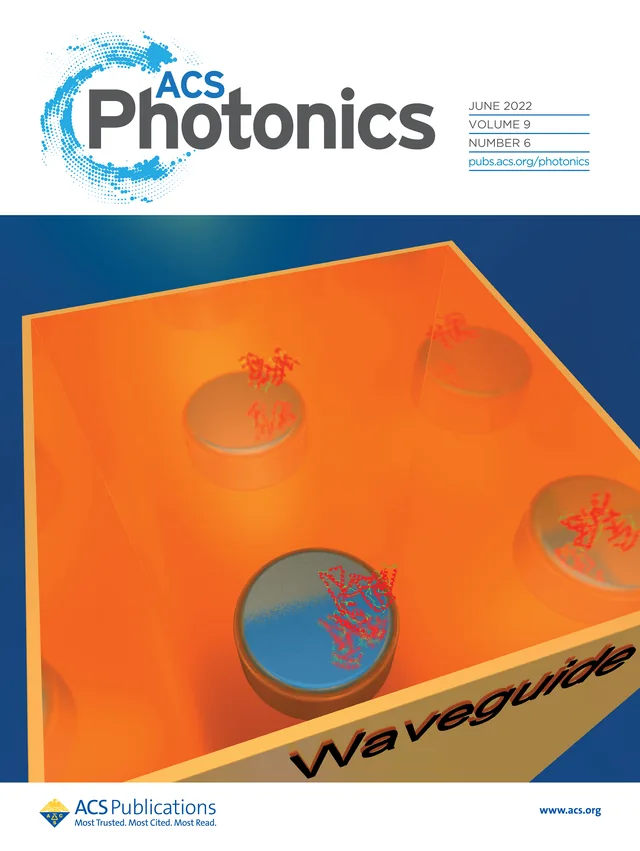
- A. Krasnok and D. Seletskiy, “Complex-Frequency Chirped Pulses for Trajectory-Resolved Scattering,”ACS Photonics (2026), published online August 4, 2026.doi:10.1021/acsphotonics.6c00602
Introduces shaped chirped pulses that sample a device’s scattering response along a measured path in the complex-frequency plane. These measurements can test competing resonance models and reveal the net winding of poles and zeros inside a closed path.
- M. M. Hasan, I. Torres, and A. Krasnok, “Quantum Magnetometers for Infrastructure Inspection and Monitoring,”Measurement 290, 122735 (2026).doi:10.1016/j.measurement.2026.122735
Assesses atomic and diamond quantum magnetometers for detecting corrosion, stress, and electrical faults in infrastructure. The review connects sensor performance to stand-off distance, calibration, noise rejection, and the requirements of field inspection.
- I. Torres and A. Krasnok, “From Flat-Optics Concept to Qualified Hardware: Skills Map for the Meta-Optics and Diffractive Optics Workforce,”Optical Engineering 65(10), 102007 (2026).doi:10.1117/1.OE.65.10.102007
Maps the skills and evidence needed to take flat-optics devices from a design model through fabrication, testing, packaging, and qualification. Worked examples connect this development process to course assignments and workforce training.
- A. Krasnok, “Constant-Amplitude 2π Phase Modulation from Topological Pole-Zero Winding,”Physical Review Letters 137(5), 053801 (2026).doi:10.1103/xt46-rfjs
Derives a pole–zero design rule for a full 2π phase rotation at a fixed scattering amplitude. It provides two routes to amplitude-stable phase control: shaped complex-frequency excitation and coordinated tuning of resonator parameters.
- A. Krasnok, A. Sarwat, W. Anderson Jr., and A. Gil, “Universities need transparent quantum hardware,”Nature Reviews Physics (2026), Comment.doi:10.1038/s42254-026-00963-4
Argues that university quantum systems should let students trace how an ideal circuit becomes a physical measurement. The comment makes instructional access and hardware transparency central to purchasing decisions.
- A. Krasnok, “Metamaterials in Superconducting and Cryogenic Quantum Technologies,”Applied Physics Reviews 13, 021311 (2026), Special Collection: Materials for Superconducting Quantum Devices.doi:10.1063/5.0282013
Reviews how engineered electromagnetic environments can reduce unwanted qubit decay and support controlled coupling in superconducting processors. It connects metamaterial design with cryogenic materials, coherence, and scalable quantum-circuit architectures.
- S. Kim, A. Krasnok, and A. Alù, “Complex-frequency excitations in photonics and wave physics,”Science 387(6741), eado4128 (2025).doi:10.1126/science.ado4128
Brings together the theory and experiments of complex-frequency excitation across wave physics. It explains how temporal pulse shaping can emulate gain or loss and control scattering, energy capture, and wave propagation without changing a material’s composition.
- D. Trivedi, A. Madanayake, and A. Krasnok, “Revealing invisible scattering poles with complex-frequency signals,”Journal of Applied Physics 137, 243103 (2025).doi:10.1063/5.0262971
Uses complex-frequency signals to access resonant poles that conventional harmonic scattering measurements can miss. The analysis demonstrates conversion of nonoscillating excitation into an oscillating response in radio-frequency and optical models.
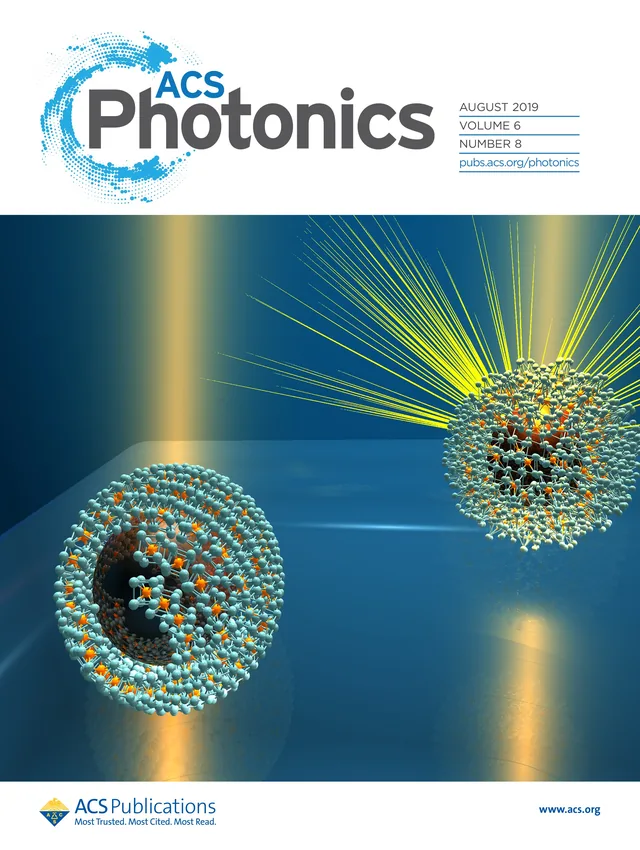
- D. Trivedi, L. Niaz, A. Alù, and A. Krasnok, “Selective Excitation of Coupled Resonators via Complex Frequency Driving: Enhanced Efficiency and Crosstalk Suppression,”ACS Photonics 12(11), 5929–5938 (2025).doi:10.1021/acsphotonics.5c01244
Shows how pulses matched to complex reflection zeros can selectively store energy in coupled resonators. In the modeled three-resonator system, the method reaches 92–95% storage efficiency while suppressing crosstalk relative to Gaussian excitation.
- A. Krasnok, P. Dhakal, A. Fedorov, P. Frigola, M. Kelly, and S. Kutsaev, “Superconducting microwave cavities and qubits for quantum information systems,”Applied Physics Reviews 11(1), 011302 (2024).doi:10.1063/5.0155213
Reviews the materials, loss mechanisms, and circuit architectures behind long-lived superconducting cavity and qubit states. It connects three-dimensional microwave resonators with bosonic encoding and the engineering challenges of multi-qubit systems.
- D. Trivedi, L. Belostotski, A. Madanayake, and A. Krasnok, “Fano-qubits for quantum devices with enhanced isolation and bandwidth,”Applied Physics Letters 122, 264003 (2023).doi:10.1063/5.0151047
Proposes Fano-shaped qubit responses for compact nonreciprocal quantum circuits. Quantum simulations predict isolation up to 40 dB and a bandwidth near 200 MHz, offering a route to planar alternatives to bulky magnetic isolators.
- S. Kim, S. Lepeshov, A. Krasnok, and A. Alù, “Beyond bounds on light scattering with complex frequency excitations,”Physical Review Letters 129(20), 203601 (2022).doi:10.1103/PhysRevLett.129.203601
Shows that tailored, time-dependent excitation can exceed scattering bounds derived for steady monochromatic illumination. The result establishes a route to extreme transient scattering responses in passive nanoparticles.
- M. Kang, Z. Zhang, T. Wu, X. Zhang, Q. Xu, A. Krasnok, J. Han, and A. Alù, “Coherent full polarization control based on bound states in the continuum,”Nature Communications 13, 4536 (2022).doi:10.1038/s41467-022-31726-1
Combines coherent illumination with a bound state in the continuum to control polarization across the full Poincaré sphere. Terahertz experiments demonstrate efficient, dynamic polarization conversion in a silicon photonic-crystal slab.
- S. Abdollahramezani et al. (incl. A. Krasnok), “Electrically driven reprogrammable phase-change metasurface reaching 80% efficiency,”Nature Communications 13, 1696 (2022).doi:10.1038/s41467-022-29374-6
Demonstrates an electrically reprogrammable phase-change metasurface with reversible, nonvolatile optical states. The device achieves an 80% absolute reflectance contrast and electrically switches the direction of a diffracted beam.
- Z. L. Deng, T. Shi, A. Krasnok, X. Li, and A. Alù, “Observation of localized magnetic plasmon skyrmions,”Nature Communications 13, 8 (2022).doi:10.1038/s41467-021-27710-w
Experimentally maps magnetic skyrmion textures generated by localized spoof plasmons. Their topology persists when the supporting structure is deformed, suggesting compact field patterns for flexible electromagnetic devices.
- Q. Zhang, G. Hu, W. Ma, P. Li, A. Krasnok, R. Hillenbrand, A. Alù, and C.-W. Qiu, “Interface nano-optics with van der Waals polaritons,”Nature 597(7875), 187–195 (2021).doi:10.1038/s41586-021-03581-5
Reviews how refraction, meta-optics, and moiré engineering control polaritons in atomically thin materials. It connects these approaches to nanoscale imaging, sensing, and optical circuitry.
- M. Song, P. Jayathurathnage, E. Zanganeh, M. Krasikova, P. Smirnov, P. Belov, P. Kapitanova, C. Simovski, S. Tretyakov, and A. Krasnok, “Wireless power transfer based on novel physical concepts,”Nature Electronics 4(10), 707–716 (2021).doi:10.1038/s41928-021-00658-x
Reviews how coherent absorption, exceptional points, metamaterials, and other wave effects can improve wireless energy transfer. It connects these physical mechanisms to the trade-offs between transfer efficiency, range, and stability.
- G. Hu, Q. Ou, G. Si, Y. Wu, J. Wu, Z. Dai, A. Krasnok, Y. Mazor, Q. Zhang, Q. Bao, C.-W. Qiu, and A. Alù, “Topological polaritons and photonic magic angles in twisted α-MoO3 bilayers,”Nature 582(7811), 209–213 (2020).doi:10.1038/s41586-020-2359-9
Experimentally demonstrates twist-controlled transitions in the dispersion of polaritons in α-MoO₃ bilayers. At photonic magic angles, light propagates with strongly reduced diffraction, extending twistronics to nanoscale optics.
- A. Krasnok, D. G. Baranov, H. Li, M.-A. Miri, F. Monticone, and A. Alù, “Anomalies in light scattering,”Advances in Optics and Photonics 11(4), 892–951 (2019).doi:10.1364/AOP.11.000892
Unifies unusual scattering effects through the poles and zeros of the scattering matrix. The review connects perfect absorption, bound states in the continuum, exceptional points, and nonradiating states within a common design framework.
- A. Krasnok, D. G. Baranov, A. Generalov, S. Li, and A. Alù, “Coherently enhanced wireless power transfer,”Physical Review Letters 120(14), 143901 (2018).doi:10.1103/PhysRevLett.120.143901
Introduces coherent receiver-side excitation to improve antenna matching and increase transferred power. Theory, full-wave simulations, and near- and far-field experiments demonstrate control through the phase and amplitude of an auxiliary signal.
- D. G. Baranov, A. Krasnok, T. Shegai, A. Alù, and Y. Chong, “Coherent perfect absorbers: linear control of light with light,”Nature Reviews Materials 2, 17064 (2017).doi:10.1038/natrevmats.2017.64
Explains how interference between incident waves can control complete absorption in a linear optical system. The review connects the underlying theory with realizations in planar structures, waveguides, graphene, and quantum systems.